Existía un hotel en Madrid que era una joya arquitectónica. Fue diseñado por el famoso arquitecto Antonio Palacios, autor también del Palacio de Comunicaciones, el Círculo de Bellas Artes o el Hospital de Jornaleros. Este hotel fue construido en un solar de la Plaza del Callao, semi esquina con la Gran Vía y lindando con el edificio de La Adriática que aún existe. Se inauguró el 01 de Febrero de 1.924.
La foto que abre este artículo muestra claramente la belleza del edificio y su situación en la plaza madrileña, esquina con el arranque de la calle de El Carmen; el hotel, víctima de la especulación inmobiliaria, fue derribado en 1.964 y ese solar hoy lo ocupa un horrendo edificio de los grandes almacenes El Corte Inglés.

La imagen de la izquierda nos muestra la entrada del hotel, años antes de la guerra civil, cuando se estaba adoquinando, tanto la plaza del Callo como las calles aledañas.
La que se ve es la mencionada calle de El Carmen que termina en la Puerta del Sol y, el edificio a la derecha, es el que existía entre esa calle y la de Preciados.

El mencionado edificio también fue derribado y, en su lugar, se construyó otro (que aún existe) para unos grandes almacenes : Galerías Preciados.
Con el tiempo, al desaparecer Galerías Preciados, ese edificio lo ocupó otra tienda llamada FNAC.
A la derecha se puede apreciar tanto el edificio de Galerías Preciados como el Hotel Florida a la izquierda y algo de la fachada del Cine Callao.
Para saber la relevancia que tuvo este hotel en la sociedad madrileña de la época vamos a transcribir parte de lo que se describe en la página web de Wikipedia :
" El hotel, de 200 habitaciones y todas ellas con cuarto de baño, alcanzó fama durante la Guerra Civil, cuando se convirtió en residencia de corresponsales, escritores e intelectuales extranjeros destacados en Madrid durante su asedio. Mijaíl Koltsov, del Pravda; Geoffrey Cox, del News Chronicle; Henry Buckley, de The Daily Telegraph; el polaco Ksawery Pruszynski, de la revista Wiadomosci Lireackie y Herbert L. Matthews, de The New York Times fueron algunos de los miembros de esta comunidad, que también se reunía en la vecina sede de Telefónica y en el Hotel Gran Vía. Más tarde, el hotel se convirtió en el alojamiento en Madrid de Ernest Hemingway y de la que entonces era su amante (y después se convertiría en su tercera mujer), Martha Gelhorn. Enviada por la revista Collier's (una publicación femenina estadounidense), Gelhorn habría de escribir en el Florida algunas de las mejores crónicas sobre la vida cotidiana en el Madrid sitiado.
John Dos Passos pasó también por el Florida e inmortalizó su estancia en un artículo llamado Habitación con baño en el Hotel Florida, publicado por la revista Esquire en enero de 1938: "Por todas partes se abren de repente las puertas de los balcones que rodean la fuente acristalada. Hombres y mujeres a medio vestir huyen precipitadamente de las habitaciones del frente, arrastrando maletas y colchones hacia las habitaciones traseras. Un camarero con el cabello ondulado sale una y otra vez de varias puertas distintas, siempre rodeando con el brazo a diferentes chicas que ríen o lloriquean. Gran exhibición de peinados y lencería. Abajo, los corresponsales se mueven por allí adormilados", escribió Dos Passos tras una mañana de bombardeos."
Este hotel, por su calidad y por su emplazamiento cercano al frente de guerra de la Ciudad Universitaria, era el punto de encuentro de muchos corresponsales de guerra extranjeros. Uno de los mas destacados fue sin duda Ernest Hemingway de cuyo paso por Madrid nos narra brevemente el periodista Manu Leguineche en el vídeo que ponemos a continuación. En él se habla del Hotel Florida y se ve el edificio que hoy ocupa su lugar :
Otras Imágenes del hotel :

El hotel junto al edificio de La Adriática y la Gran Vía en 1.950

Vista de la Plaza del Callao desde el edificio del Palacio de la Prensa
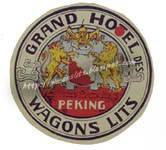
La Compañía Internacional de Coches Camas (Wagons Lits) regentó el Hotel Florida hasta su cierre; no he encontrado información al respecto y por eso no puedo precisar si era la propietaria o simplemente se hacía cargo de la explotación del hotel como muchos otros en el mundo. Lo que sí puedo decir es que al cerrarse el hotel, liquidó todos los enseres y los ofreció a los empleados de Wagons Lits.
De aquellos enseres aún se conservan en casa unas jarras de plata para el servicio de café; en una de ellas, en la mas grande, aún se pueden leer las siglas "H F" :

----
De aquellos enseres aún se conservan en casa unas jarras de plata para el servicio de café; en una de ellas, en la mas grande, aún se pueden leer las siglas "H F" :

Jarras para café del desaparecido Hotel Florida de Madrid (Plaza del Callao)
----
There was a hotel in Madrid that was an architectural gem. It was designed by the famous architect Antonio Palacios, also designed the Palacio de Comunicaciones, the Fine Arts and the Laborers Hospital. This hotel was built on a plot of the Plaza del Callao, semi corner of Gran Via and bordering on the Adriatic that building still exists. Opened on 01 February 1924.
The photo that opens this article clearly shows the beauty of the building and its location in the bullring, with the starting corner of the street of El Carmen, the hotel, a victim of real estate speculation, was felled in 1964 and today is occupied by the solar an ugly building of the department store El Corte Ingles.
The left image shows the entrance to the hotel, years before the civil war, when it was paved, both the square and surrounding streets Callo.
Which is mentioned is the street of El Carmen that ends at the Puerta del Sol and the building to the right, which existed between this street and Preciados street.
The said building was also demolished and in its place was built another (still there) for some department stores of Galerias Preciados.
Over time, the disappearance Gallerias Preciados, the building was occupied by another store called FNAC.
On the right you can see both the Preciados Gallerias building as the Hotel Florida on the left and some of the facade of the Callao cinema.
To know the relevance that had this hotel in Madrid society at the time of going to transcribe what is described in the Wikipedia website :
"The hotel's 200 rooms and all with bathroom, achieved fame during the Civil War, when it became the residence of correspondents, foreign writers and intellectuals featured in Madrid during its siege. Mikhail Koltsov, the Pravda, Geoffrey Cox, the News Chronicle, Henry Buckley, The Daily Telegraph, the Polish Ksawery Pruszynski, issue Wiadomosci Lireackie and Herbert L. Matthews of The New York Times were among the members of this community, which also met in the nearby headquartersTelefonica and the Hotel Gran Via Later the hotel became the property of Ernest Hemingway in Madrid and his then mistress (and later became his third wife), Martha Gellhorn. Submitted by magazine Collier's (American women's publication), Gellhorn would write to the Florida some of the best features about everyday life in besieged Madrid.
John Dos Passos also passed through the Florida and immortalized his stay in an article called Room with bath in the Hotel Florida, published by Esquire magazine in January 1938: "Everywhere suddenly open the doors of the balconies that surround the glass source. Men and women half dressed hurriedly fled the front room, carrying suitcases and mattresses into the back rooms. A bartender with curly hair out again and again several different doors, always with his arm around to different girls to laugh or whine. Great display of hairstyles and lingerie. Abajo, correspondents sleepy move there, "Dos Passos wrote after a morning of bombardment."
This hotel, for its quality and its location near the war front of the City University, was the meeting point of many foreign war correspondents. One of the most prominent was undoubtedly Ernest Hemingway whose stay in Madrid journalist tells Manu Leguineche briefly in the video that we offer below. It speaks of the Hotel Florida and is the building that now takes its place :
Other Images of the hotel :
The hotel next to the building of the Adriatic and the Gran Via in 1950
View of the Plaza del Callao from the building of the Palacio de la Prensa
International Company Car Beds (Wagons Lits) runs the Hotel Florida until it closed, I have not found information about it and I can not say whether it was the owner or simply took over the operation of the hotel like many others in the world . What I can say is that when you close the hotel, settled all items and offered to employees of Wagons Lits.
Of those belongings still remain at home jars of silver coffee service, in one of them, in the biggest, you can still read the letters "HF"